We’ve all been there. A bag that starts peeling after eighteen months. A belt that cracks in its second winter. A wallet that looks tired before your credit card expires. The fashion industry has built an entire economy on this kind of planned disappointment. And synthetic “leather-look” materials are among its biggest let-downs.
Real leather doesn’t work like this. A well-chosen piece of full-grain leather just gets better and better. The patina deepens. The fit softens to your hand, your shoulder, your step. What you’re buying is a relationship with a material that pays you back.
This selection is for the person ready to stop replacing and start investing. Five categories. Five pieces chosen to last not seasons, but decades.
The tote that does everything
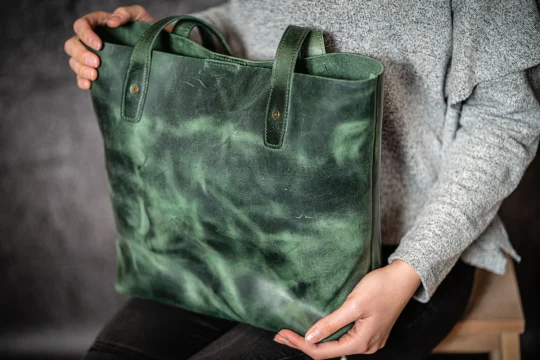
What to look for: Full-grain vegetable-tanned leather, unlined or linen-lined, with sturdy brass or solid steel hardware. Avoid any bag described as “leather with fabric trim” or “vegan leather”. These are the first to fail.
Why it lasts: Vegetable-tanned leather uses natural tannins from tree bark. The result is a dense, breathable hide that develops a rich, warm patina over time. The same bag that looks pristine but stiff in year one becomes something gloriously personal by year five.
What to spend: Expect to pay £200–£600 for something built to last. That’s less than £30 a year over a twenty-year lifespan which is a fraction of what you’d spend cycling through fast-fashion alternatives.
The buy-it-for-life signal: Can you see the natural grain variations? Is the leather thick enough to feel slightly stiff when new? Are the stitches tight, even and waxed? If yes to all three, you’re looking at a keeper.
Shop it:
- Galen Leather Tote Bag — handmade in Istanbul, Turkey, from 100% vegetable-tanned cowhide with waxed thread hand-stitching and solid brass hardware. The undyed natural version is one of the purest expressions of the buy-it-for-life philosophy you’ll find anywhere.
- HERZ Leather Bags — a Shibuya, Japan-based workshop making bags to order since 1973. One craftsperson, one bag at a time. Full-grain vegetable-tanned leather with reinforced handles and wear-points.
- KMM & Co. Vegetable Tanned Collection — handmade in Atlanta, USA, using Italian Vachetta leather including Horween Milled Vachetta from Chicago. There are no factories and no warehouse. Each piece is made by hand in-studio.
The full-grain belt
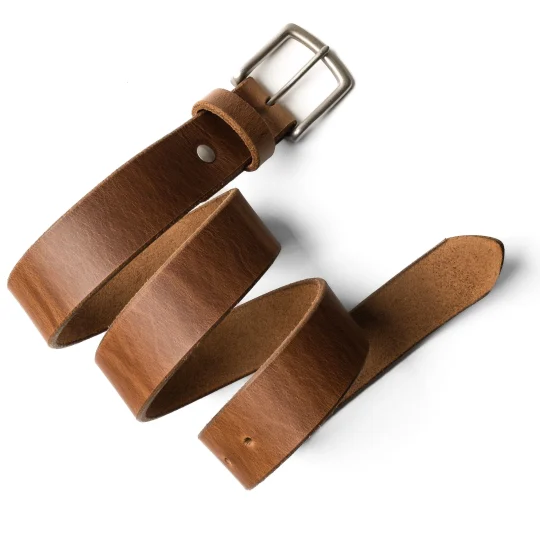
What to look for: A single piece of full-grain leather (no layering, no bonding), a solid brass or nickel buckle and hand-stitched or riveted construction at the loop and tip.
Why it lasts: The belt is the most abused item in most people’s wardrobes and yet it’s routinely made from the cheapest possible leather substitute. A real full-grain belt absorbs that punishment differently. The fibres compress and flex rather than crack and split. The surface scuffs and scratches in ways that add character.
What to spend: £60–£150. A decent maker will offer re-buckle and re-tip services, meaning the base belt can outlive several sets of hardware. Some saddlers and heritage makers have offered this service for generations.
The buy-it-for-life signal: Flex the belt gently. Genuine full-grain leather flexes back without creasing unnaturally. If it creases sharply or feels hollow, it’s likely bonded or split leather laminated over a base — it won’t last.
Shop it:
- Pierotucci Belts — full-grain leather belts made by skilled artisans in Florence, Italy, with meticulous hand-finishing. Every belt an example of Florentine craft tradition; ships worldwide.
- Popov Leather Classic Belt — made in a small workshop in Nelson, British Columbia, Canada. It is a single strap with no stitching, Chicago-screw hardware and a lifetime guarantee. The benchmark buy-it-for-life belt.
- Tanner Bates Handmade Leather Belts — a British maker using exclusively full-grain vegetable-tanned leather. Every strap is hand-cut, dyed and burnished with bevelled edges. This is heirloom quality at a sensible price point.
Chelsea boots worth handing down
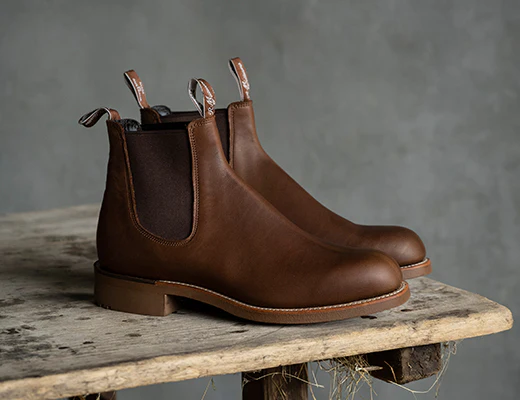
What to look for: Goodyear-welted or Blake-stitched construction, a full leather upper and lining and a leather or leather-and-natural-rubber combination sole. The welt is key — it’s the strip of leather joining upper to sole, and it’s what makes a boot re-soleable.
Why it lasts: A pair of well-made leather Chelsea boots, re-soled every five to eight years and conditioned occasionally, can realistically last thirty years or more.
The key is the welt. Without it, when the sole wears through the boot is finished. With it, a cobbler can strip the sole and build it back up. The upper, which is the expensive and beautiful part, keeps going indefinitely.
What to spend: £180–£400 for a new pair from a reputable maker. Or considerably less for a pre-loved pair from a specialist vintage retailer, where the leather has already been broken in beautifully.
The buy-it-for-life signal: Look for the welt. A ridge of stitching where the upper meets the sole. Ask the retailer whether the boots can be re-soled.
Shop it:
- R.M. Williams Craftsman Boot — a single piece of leather wrapping the entire upper, Goodyear-welted, made in Adelaide, Australia, since 1932. One of the most recognisable Chelsea boots in the world. They are resoleable and there is a full repair service.
- Meermin Wholecut Chelsea Boot — handcrafted in Mallorca, Spain, using leathers from renowned European tanneries including Tannerie d’Annonay and Charles F. Stead. Goodyear-welted, resoleable, and exceptional value for the construction quality.
- Loake Chatsworth Chelsea Boot — waxy leather upper, Goodyear-welted, made in Northamptonshire, England, since 1880. Full repair service available direct from Loake.
The bifold wallet
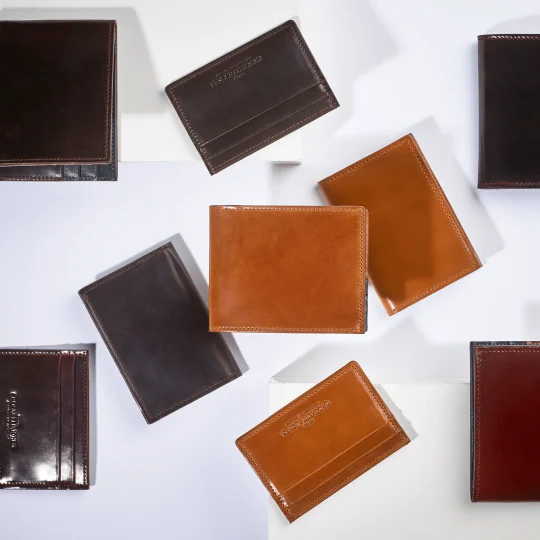
What to look for: A slim bifold in full-grain or shell cordovan leather, minimal stitching and a simple, uncluttered design. Avoid anything with plastic card-slot inserts or synthetic linings.
Why it lasts: The wallet is a daily-carry item that gets sat on, squeezed into pockets and pulled in and out of bags hundreds of times a year. Cheap materials compress and crack under this pressure. Full-grain leather does the opposite. It compresses to your specific carry habits, developing a shape that’s uniquely yours.
Shell cordovan, a cut from the hindquarters of a horse, processed by a handful of tanneries worldwide, is the very best wallet material. It resists creasing almost entirely, polishes to a mirror shine, and develops an extraordinarily beautiful patina.
What to spend: £40–£80 for an excellent full-grain bifold. £150–£300 for shell cordovan. Both represent better long-term value than a £20 wallet replaced every two years.
The buy-it-for-life signal: A quality wallet will feel dense and slightly firm when new. If it already feels soft and floppy in the shop, the leather is either low grade or already breaking down. Also check the edges. Properly finished, burnished edges indicate a maker who cares about the whole object, not just the surface.
Shop it:
- Eternal Leather Goods Shell Cordovan Bifold — handmade in the US, saddle-stitched, hand-burnished edges. Available in seven cordovan colours with a vegetable-tanned interior. Reinforced at stress points; made to order.
- ToroNegro Shell Cordovan Wallets — made from cordovan from Rocado, Italy’s revered specialist tannery. Distinctive colours and natural marbling make every wallet unique.
- Crockett & Jones Shell Cordovan Billfold — Horween shell cordovan, 100% hand-dyed and finished, cut and made in Northampton. From one of England’s great heritage shoemakers, applying the same standards to leather goods.
The structured handbag
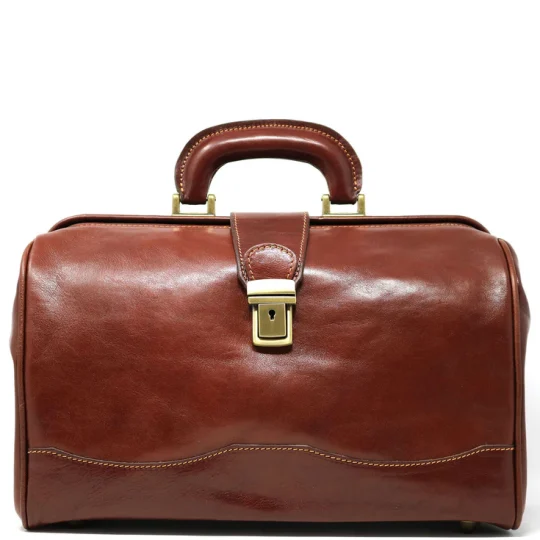
What to look for: A classic structured shape such as a top-handle, a doctor’s bag or a boxy shoulder bag in full-grain calf or pebble leather, with metal feet on the base, substantial hardware and either unlined or with a suede lining (fabric linings wear out and tear long before the leather does).
Why it lasts: A bag that holds its shape protects its contents and ages with dignity rather than collapsing into a shapeless sack. Good leather does this naturally, developing memory for its own form over time.
The metal feet on the base are a simple but telling indicator of quality. They mean the maker expects the bag to be used for years. It’s a small detail that signals a long-term mindset.
What to spend: £250–£800 for a new piece from an independent maker or heritage brand. The second-hand market for structured leather bags is also exceptional. Many of the best pieces available today were made in the 1990s and early 2000s and have decades of life still ahead of them.
The buy-it-for-life signal: Set the bag down. Does it hold its shape? Does the base sit flat? Open and close the hardware a few times. Does it feel satisfying, or flimsy? These physical tests tell you more than any product description.
Shop it:
- Floto Ciabatta Leather Doctor Bag — handcrafted in Tuscany, Italy, from full-grain calfskin using traditional Etruscan tanning methods. A structured doctor-bag silhouette built to last lifetimes which ages into something truly extraordinary.
- Tuscany Leather Structured Handbags — clean structured outlines in full-grain leather from Florentine, Italy, tanneries. Timeless proportions designed to hold their form from morning to night, year after year.
- Vestiaire Collective — for the most sustainable option of all, a pre-loved structured leather bag, already proved to last. Search full-grain or calf leather top-handle styles from heritage brands. A piece from the 1990s or early 2000s has already survived decades. And has decades more to give.
A note on care
None of these pieces require much. A light conditioning with a natural leather balm or beeswax cream once or twice a year. Dry storage away from direct heat. A quick wipe-down when wet, followed by natural drying. That’s it. The idea that real leather is “high maintenance” is one of the industry’s more persistent myths. It was invented to make the low-maintenance alternatives sound more attractive.
Real leather is, by its nature, a material built for use. It was designed, by biology and then by thousands of years of craft, to be worn, carried and lived with. The more you use it, the better it gets.
That’s the bargain. Buy it once. Keep it for life.